"Bring Together the Geeks and the Freaks"
Martha Minow at the TUM Think Tank
"Bring together the geeks and the freaks."
The line landed with a laugh, but Martha Minow meant it entirely seriously. Over two days of conversation at the TUM Think Tank, the Harvard Law School professor, former dean, and one of the world's leading voices at the intersection of law, ethics, and technology stressed the idea that the most important work happens at the table where different kinds of minds sit together, where the technical and the humanistic, the rigorous and the creative, the expert and the citizen have to find a shared language.
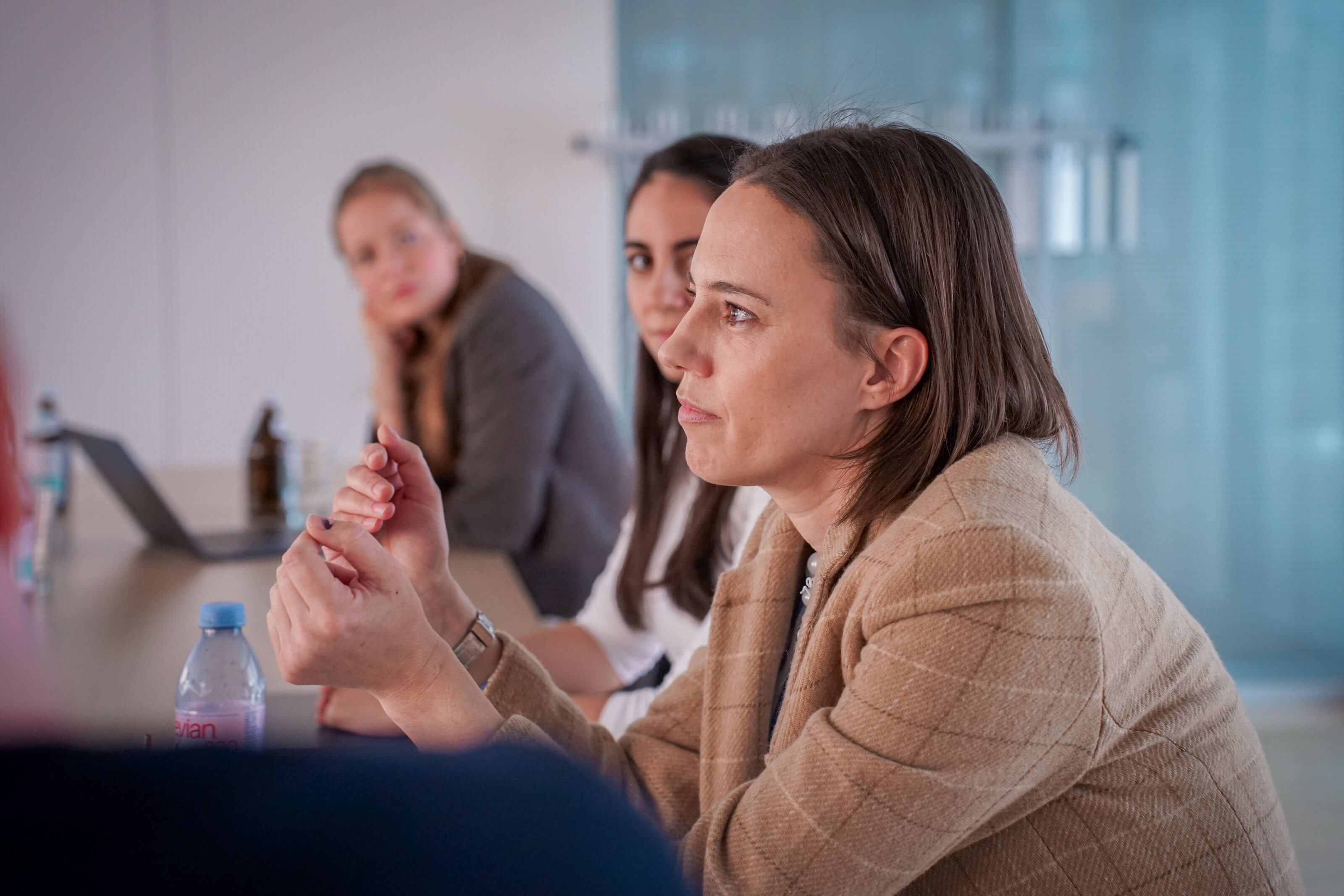
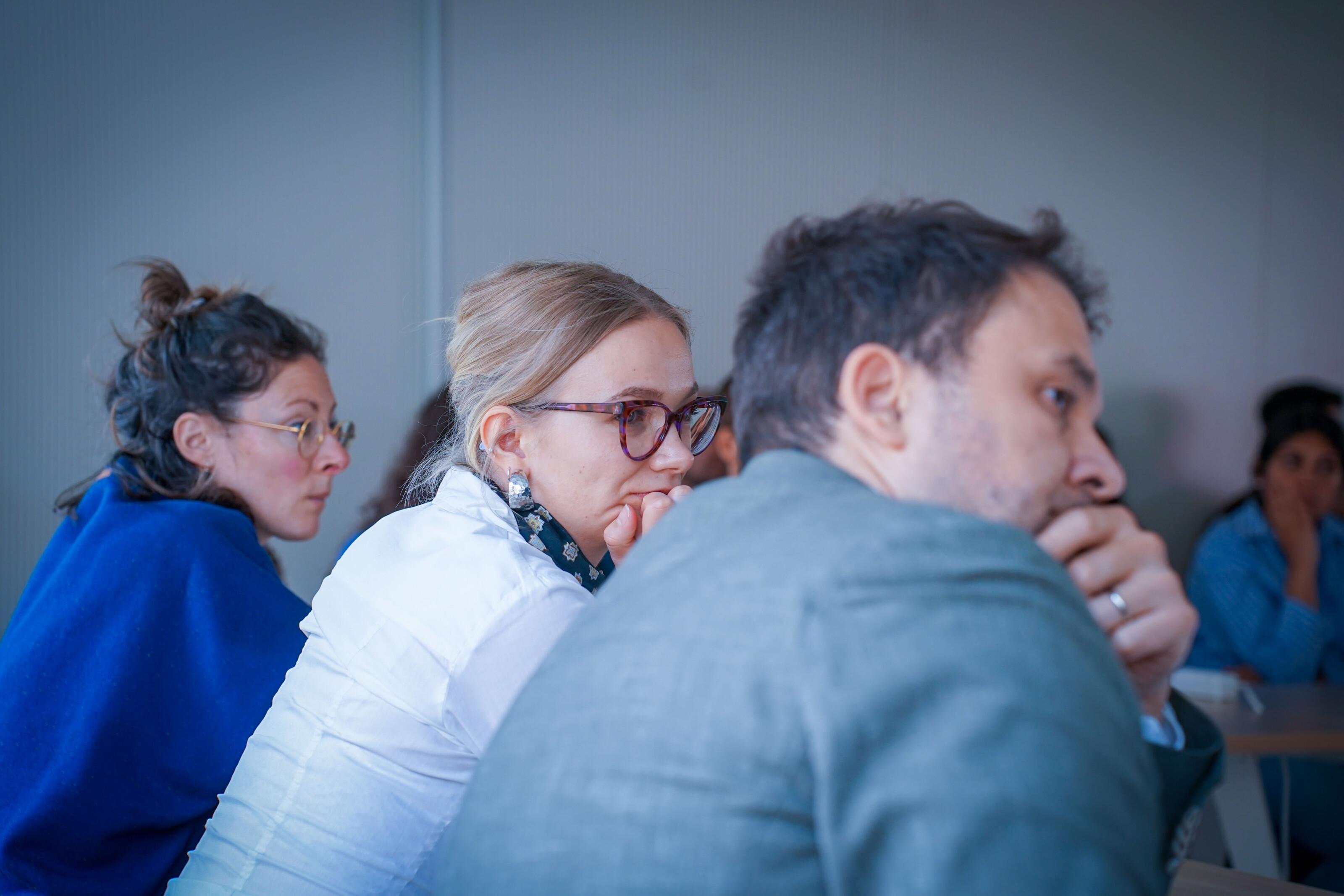
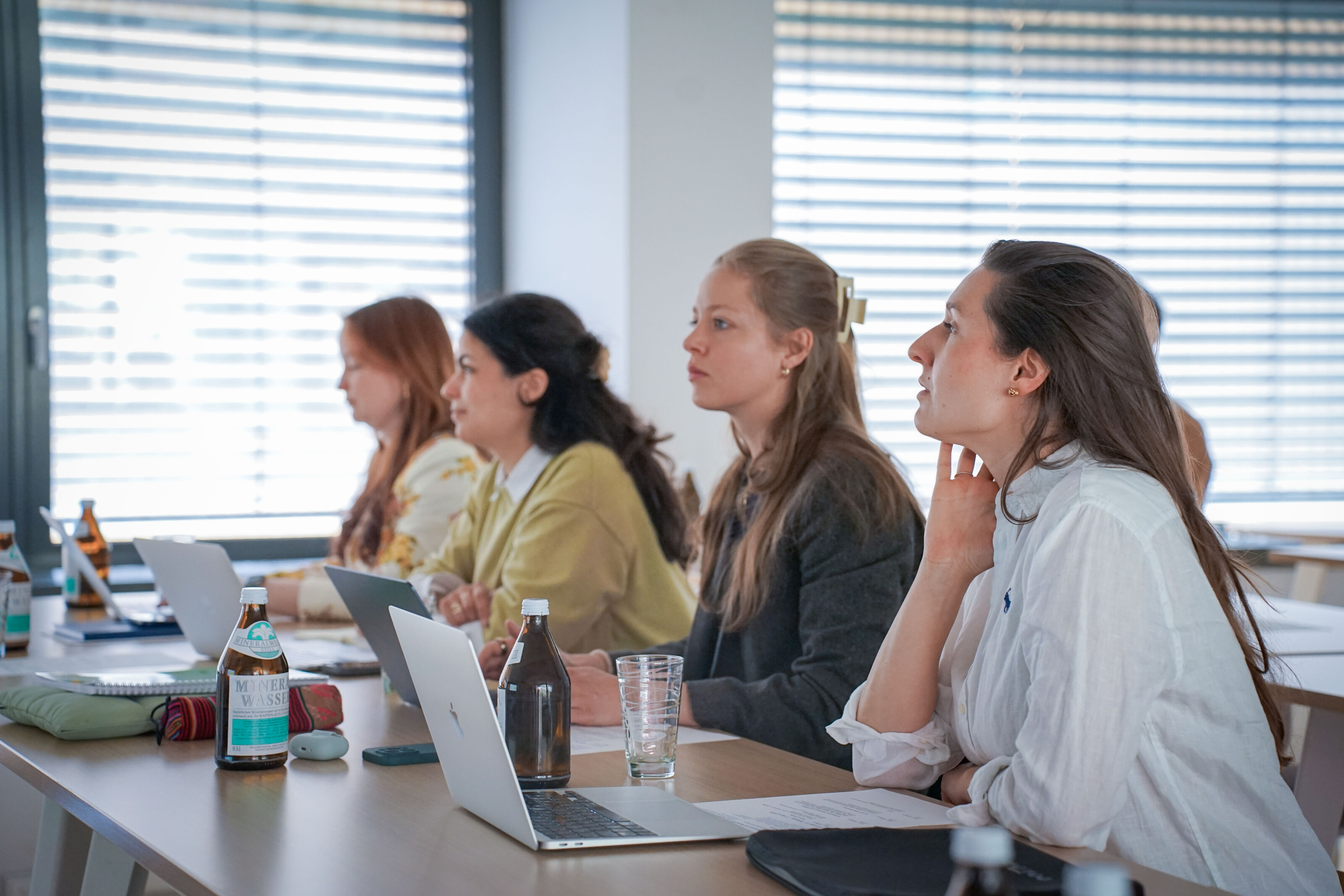
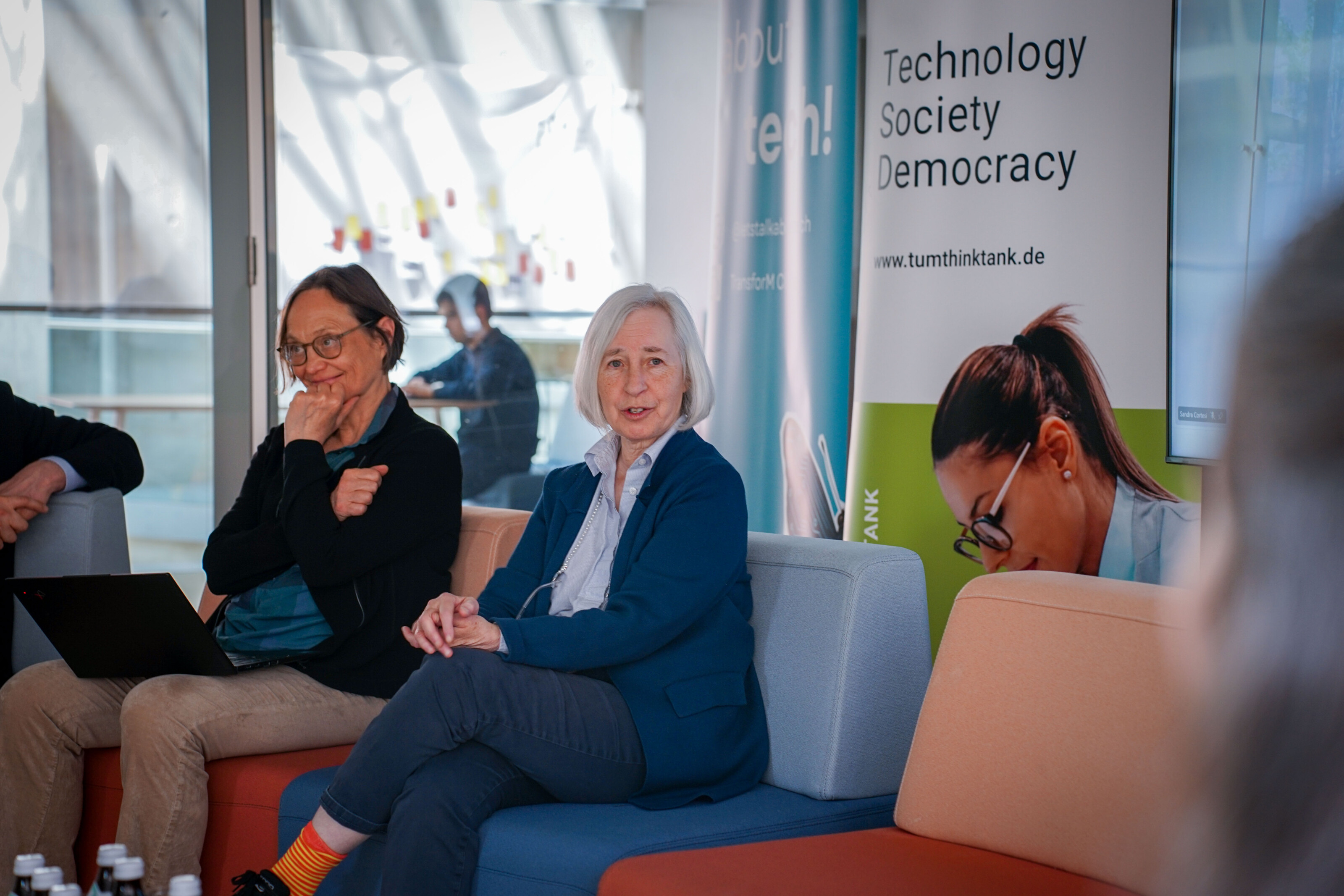
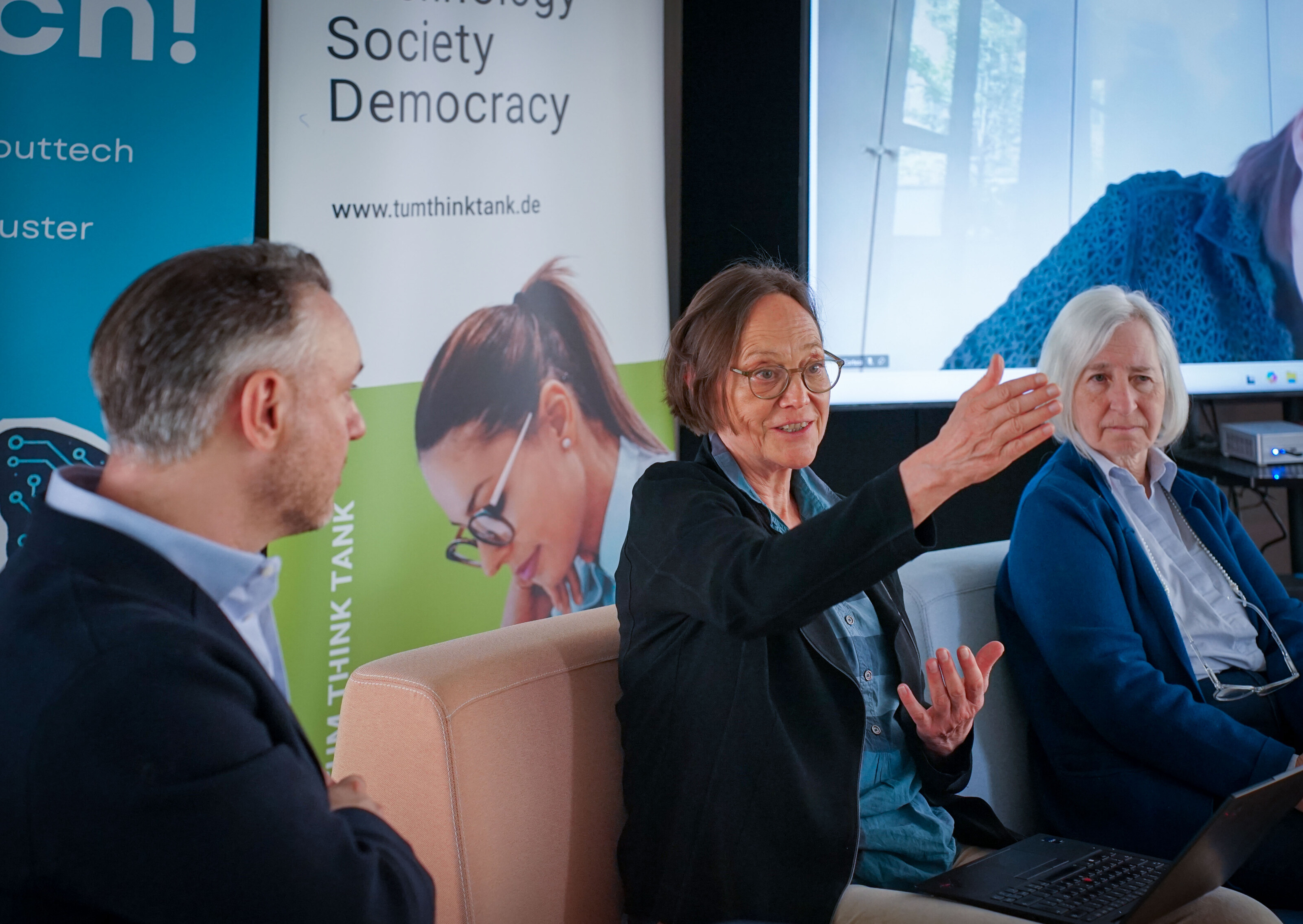
Minow was in Munich to receive the Friedrich Schiedel Prize, awarded by TUM's School of Social Sciences and Technology for her extraordinary contribution to scholarship on law, justice, and society. Her visit extended well beyond the ceremony, as she spent time with research labs, with doctoral students, and with the broader community gathered for a Brown Bag Lunch convened by TransforM, the TUM Cluster for Transformative Technologies and Societal Change.
A Moment of Discontinuity
As Urs Gasser framed it during TransforM’s Brown Bag Lunch: we are entering a period of profound transformation in which both our goals and the tools to achieve them are increasingly unclear. While uncertainty has always existed, today’s moment represents a true discontinuity, driven by shifts such as AI and the reconfiguration of the global order. Our current institutions, however, were designed for a different era, one defined by clear directions and a focus on efficiency. Martha Minow took this framing and impressively built on it across both days, pushing the question of what it means to respond seriously to discontinuity, as individuals, as institutions, and as a society.
Justice in a World Reshaped by Technology
Discontinuity hits hardest where institutions were already fragile and inequalities already deep. At the Brown Bag Lunch co-organized by TransforM, the Munich Center for Transformative Technologies and Societal Change, and moderated by Caitlin Corrigan, the central question read: What is the biggest worry about justice and equity in the age of emerging technology?
The answers from the panelists featuring faculty including Silke Beck, Christian Fieseler, Sabina Leonelli, Sebastian Pfotenhauer, and Sandra Cortesi alongside Martha Minow, converged on a set of tensions that refuse easy resolution.
Christian Fieseler raised the question of legitimacy: emerging technologies are too often presented as inevitable, ahistorical, the product of forces beyond democratic control.
"Technology risks being seen as elitist if people do not feel included in shaping it."
AI in particular, he argued, is not universally experienced as a public benefit and that gap between the enthusiasm of developers and the ambivalence of publics is a political problem.
Silke Beck brought the international dimension. The institutions we rely on to manage collective risks from climate to AI are themselves under attack: defunded, delegitimized, subjected to political pressure. And the populations least responsible for the conditions causing harm are most exposed to its consequences. The intersection of artificial intelligence and climate change, she argued, is not an academic abstraction. It is already a crisis being borne by people in the Global South and by marginalized communities everywhere.
Sandra Cortesi focused on young people, a population that is often among the most enthusiastic adopters of new technologies and the least consulted about their design. Her research on 12–18 year-olds makes the point sharply: technology enters young people's lives without their input.
"Young people are excited about technology, but they should also have a say in how it is designed."
Sebastian Pfotenhauer returned to the structural mismatch:
"How do we align the map of innovation with the map of democracy?"
The places where technology is made and the places where its consequences are felt are not the same places. The people shaping the future are not representative of the people who will live in it, which is not just an ethical problem, he argued, but poses a problem of political legitimacy.
Minow listened, interjected, and then offered a reflection that cut to the core:
"We cannot operate as a society without a shared sense of what is true."
The erosion of shared truth accelerated by the same technologies we are trying to govern is the crisis within the crisis. And the stakes, she suggested, could not be higher:
"It is a race about what we will destroy first: the environment or each other."

Participation, Power, and the Future of Democracy
If discontinuity renders our existing institutions inadequate, it also raises the harder question: who gets to build the new ones? The afternoon session touched on questions of participation and democratic agency. Technology, the group agreed, is reshaping what participation can mean, sometimes enabling new forms of collective voice, sometimes weaponizing scale and speed against deliberation. Minow was cautiously optimistic about the possibilities, if we design it that way. The same infrastructure that could enable participation can be designed, and has been designed, to do the opposite: to create echo chambers, to reinforce isolation, to concentrate power rather than distribute it.
Sabina Leonelli put the challenge starkly: "Corporate power in technology is reaching levels we have not seen before." The ability to set the terms of digital life, what information people see, what decisions algorithms make, what labour is automated away, is concentrated in the hands of a small number of actors with no formal democratic accountability. Finding political responses to that concentration is one of the defining institutional challenges of the moment.
Minow was also willing to sit with the harder questions. The future of work and the meaning that work provides, to name just one example: "We are not prepared for a world where work disappears." And beyond the economic question is a psychological one:
"Despair is a powerful tool. If people lose hope, they stop acting."
Designing institutions that sustain hope, that keep people engaged, that give them reason to believe their participation matters is as urgent as any technical challenge.
Making and Telling
Which brings the question back to the room itself: if discontinuity demands new institutions, new skills, and new willingness to experiment, what does that actually look like for a group of researchers with the time and resources to try? When the Brown Bag Lunch came to its close, Caitlin Corrigan put a question to the table: What should a large group of social scientists with long-term funding actually do in this moment?
The answers came quickly, in the spirit of the afternoon: “Respond. Engage. Keep going, fully committed. Work together and involve the public. Experiment without making it someone else's problem.”
Minow's was the simplest and perhaps the most demanding: "Make and tell." Do the work, create things like collaborations, institutions, ideas, prototypes, that didn't exist before. And then tell the story of what you made, what you learned, and why it matters. In a moment of discontinuity, when the institutions we have are struggling and the ones we need don't yet exist, the act of making and of narrating what making reveals, is itself a form of institutional renewal.
Circling back to the notion of discontinuity, Urs Gasser noted that this is precisely what the TUM Think Tank is designed to be: a design experiment for new forms of learning and collaboration, one that "increases the likelihood of finding meaningful patterns" by testing, measuring, and staying curious rather than rushing toward predetermined answers.
That is, in the end, what two days with Martha Minow felt like. A sustained, searching, generative argument for the importance of the questions and for the courage to keep asking them. And as Markus Siewert concluded: “Let’s keep exploring how we can defy the laws of gravity with this Think Tank.”
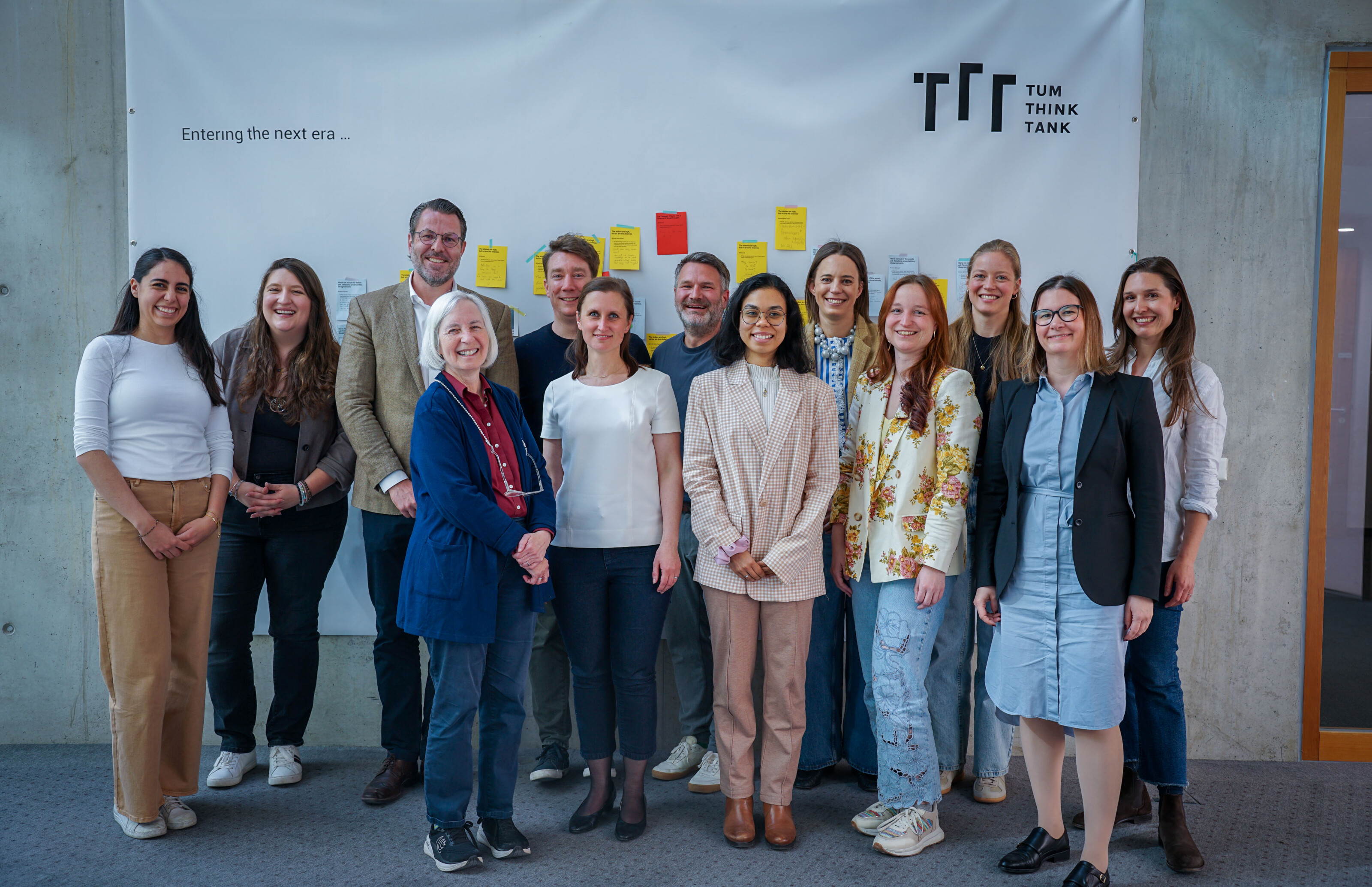
A heartfelt thank you to Martha Minow for these inspiring and refreshing two days, to TransforM for bringing together a room full of curious people for the Brown Bag Lunch and to everyone who joined us and shared their ideas - including the session moderators (Noha Lea Halim, MohaNed Bahr, Caitlin Corrigan, Markus Siewert).
Martha Minow is the 300th Anniversary University Professor at Harvard Law School and a recipient of the 2025 Friedrich Schiedel Prize from TUM's School of Social Sciences and Technology. Her visit was hosted by the TUM Think Tank in collaboration with the TransforM Cluster.