
Output / Research Journal
Oracles
The history of foresight provides us with interesting insights into the mechanisms and dynamics that we can use to understand our relationship to the future today, and it also gives us useful hints on how we can design new foresight methods.
Note 4.
The earliest examples of foresight can be found in prophecies and oracles. It has been pointed out by Carissa Véliz in her book Prophecy that such future narratives were intimately connected with power, and that stories about the future often are used to define and shape it. This is true, but that was not the only use of such early foresight practices; these practices also had other, more subtle, functions.
Oracular practices and technologies are meta-cognitive tools, and they help us reframe our understanding of the world, and give us options we might not otherwise have thought of. The mechanism behind these technologies relies on a very simple insight: we have evolved to frame problems quickly so we can solve them, and for the majority of problems we have to solve that confers a great advantage: the ability to decide quickly is in a large set of cases adaptive.
There exists, however, a class of problems so complex that quick framing might obscure much better choices and ideas, and this includes life-changing choices, game-changing policies, all serious matters of state: the kinds of questions often submitted to oracular advice, because what oracular advice does is to disturb the framing and understanding we have in such a way as to force us to change our minds.
We can see this even in the way oracles were consulted. Anyone who wanted to consult the oracle of Delphi had to travel there, a journey that could take time and effort. Other oracles in Greece were also localized, and required some upfront investment in time for anyone seeking advice. This, in itself, meant the supplicant prepared to change their mind and ensured that the advice was received in a generative way. The very architecture and location of the oracle replaced our preparatory work.
Then, the advice itself was often fragmented, ambiguous and open — requiring whoever heard it to spend time reconfiguring their understanding of the issue at hand through an entirely new perspective. This is the key: to break our own framing we need some kind of external impulse to re-organize it and it needs to be an open and generative impulse, since any direct polemical input would risk being rejected out of hand.
The work of interpreting the oracle changes our minds.
Nowhere is this more obvious than in that genius piece of technology we have in the I-Ching, one of the oldest known books. The I Ching — loosely translated as the book of changes — consists of 64 hexagrams made of whole or broken lines, each representing a possible answer to a question.
Some of the lines can be changing lines so a broken line might turn into a whole line, representing the shift from the present to the future state. The questioner asks a question, tosses coins or stalks to produce the hexagram and then reads the explanation of the hexagram — always obscure and fragmented. It is then up to the questioner to integrate the hexagram with their understanding, and in doing so new ways of seeing the world.
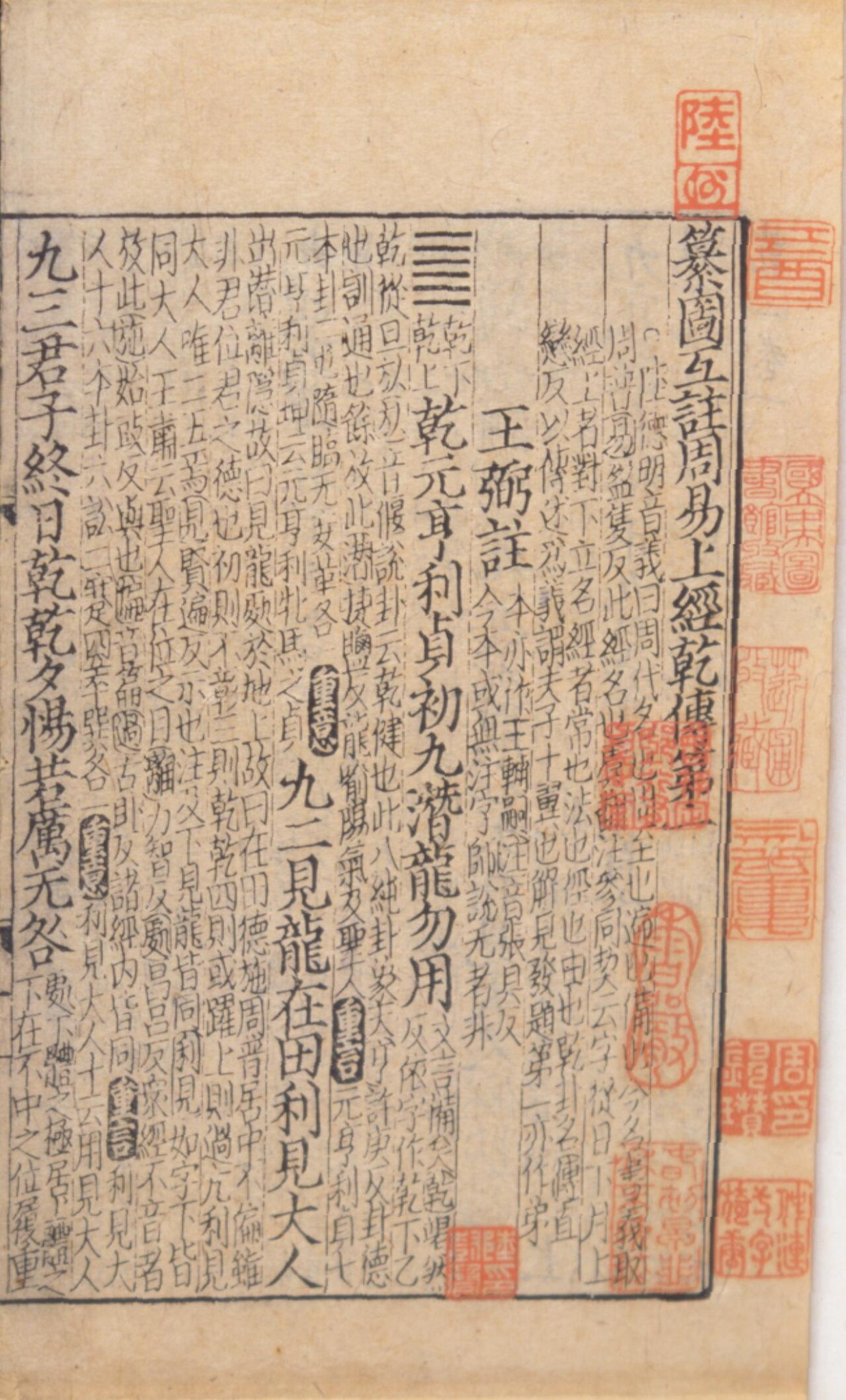
The beauty of this is in the simplicity: 64 different lenses, all meant to help you change your mind. A formidable cognitive tool for anyone who wants to challenge their own frame of mind. The additional subtleties of changing lines and commentaries written by sages offer even more depth and variation.
The I Ching offers, then, a tool to think with, and ideally all foresight methods and techniques do the same.
Our intuitive understanding of the need to create external impulses to our thinking about the future recurs through history in different ways: the Tarot is the perhaps most advanced Western tool, and rewards deeper study with both new perspectives and a deeper understanding of human nature. A valuable oracle needs to be delivering two things: a variety of lenses through which the future can be reframed and an understanding of human psychology and how to help us change our minds. Each oracular technology assumes a model of the human soul and it is fascinating to think about what kind of human mind is assumed by the I Ching, the Oracle in Delphi and the Tarot.
This intuition that we need tools to think with remains with us, and we see it translated, in our age, into toys like the magic eightball — but we also are starting to see it in the way some use AI, hence Véliz's warning not to cede the means of prediction to the machine. But AI also offers another intriguing opportunity: what new kinds of positive oracles can we build? Which new tools that can help us change our minds could we construct today? And how would we do that?
This is one of the things we explore in a nascent project at the TUM think tank, and we hope to discover new ways of engaging with the future in ways that help us change our minds. In the meanwhile you can try the I-Ching here.